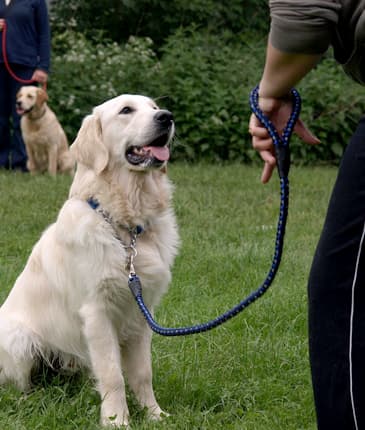
What is the difference between balanced and positive only dog training?
Positive only training uses rewards alone and never applies consequences. Balanced training uses rewards plus clear, fair consequences, so a dog learns both what earns reward and what ends a behavior. Positive only works well for teaching new skills. Balanced training is generally more effective for stopping established, self rewarding behavior like aggression.
I am a balanced trainer, so you should read this knowing which side I am on. I am going to make the strongest honest case for positive only training anyway, because you deserve to decide this properly and because the internet version of this argument is useless to anyone with an actual problem dog.
Both camps are loud, and both overstate. Positive only advocates will tell you any consequence is abuse. Balanced trainers will tell you positive only is wishful thinking. Neither of those is true, and the disagreement is narrower than it looks.
What the two terms actually mean
Positive only, sometimes called purely positive or force free, means the trainer adds things the dog wants to increase behavior and withholds them to decrease it. Food, praise, play, access. No corrections, no aversive tools. The dog is never made uncomfortable in order to change its behavior.
Balanced means the trainer uses rewards and also uses consequences. A consequence can be as mild as your body blocking a doorway or a leash pressure the dog learns to turn off by moving correctly. The dog learns both halves: this earns something good, and this ends here.
The word balanced does the work in that sentence. It does not mean harsh, and it does not mean tool first. In my programs the starting point is always leadership, structure and clarity. Tools are chosen for the individual dog and the specific problem, decided with the owner during the evaluation, not applied by default.
Where positive only genuinely wins
Teaching a new behavior. If a dog does not yet know what sit means, reward based shaping is fast, precise and pleasant for everybody. There is nothing to correct because there is no established habit in the way.
Puppies in their first months. Building a positive association with people, dogs, handling, surfaces and noise is exactly what reward based work is for, and a heavy handed approach at that age causes real harm.
Fearful dogs, in the early stages. A dog whose problem is fear needs its confidence built before anything else, and counter conditioning is the right tool. Adding pressure to a genuinely frightened dog usually makes it worse. Any competent balanced trainer knows this and works accordingly.
Any household where the owner will not apply a correction consistently or fairly. An inconsistently applied consequence is worse than none, because the dog cannot predict it. If that is honestly you, a good positive only program in committed hands beats a balanced program in half hearted ones.
Where positive only tends to fail
Behavior that is already rewarding itself. This is the crux of the entire argument. When a dog lunges at another dog and the other dog goes away, the behavior worked. When it chases a deer, the chase is the reward. You cannot outbid that with a treat, because you are not competing with your food, you are competing with the thing the dog already wants more.
Anything requiring reliability under real distraction. A recall that works in the kitchen and fails at the greenbelt when a deer moves is not a recall. It is a preference. Something has to make the wrong option genuinely not an option when the stakes are high.
The severe end of aggression, where the honest problem is that time has run out. A dog that has bitten is often on a short clock with a landlord, an insurer, a family member or a court. Protocols that might work over many months are not always available. This is where the families I see have usually already spent a year.
That is the pattern in my practice, and I want to be precise about what it does and does not prove. I am frequently the third trainer a family calls, after positive only methods have failed. That is a genuinely biased sample: the positive only cases that worked never reach me. It does tell you something real about the hardest end of the spectrum, and nothing at all about the ordinary cases.
The fair criticism of balanced training
It depends heavily on the individual trainer's skill and timing, which makes it riskier to buy. A correction that is late, too strong, or unclear teaches the dog nothing except that you are unpredictable. Reward based work fails more gently when done badly. Badly done balanced work can make a dog worse, and can damage its trust in you.
It attracts people who should not be doing it. Balanced is a real methodology, and it is also a convenient label for someone whose entire toolkit is an e collar and confidence. If a trainer reaches for a tool before they have asked you detailed questions about what your dog actually does, walk away regardless of what they call themselves.
The research picture is genuinely mixed, and I am not going to pretend otherwise. There is a body of work associating aversive methods with elevated stress indicators in dogs. Balanced trainers argue much of it studies harsh application rather than skilled application, and that unresolved aggression carries its own severe welfare cost, up to and including euthanasia. Both of those points have force. Anyone claiming this is scientifically settled in either direction is overselling.
How to actually decide
Start with the problem, not the philosophy. If you are teaching a puppy the basics, building confidence in a shy dog, or adding new skills, reward based work is the obvious first choice and you may never need anything else. If you are trying to stop an established, self rewarding behavior in an adult dog, especially one involving teeth, you need a method with a way to end behavior, not only encourage it.
Then judge the person rather than the label. Ask how many dogs they have personally worked, ask what they do when their first approach is not working, and ask them to describe a case they failed. A trainer who cannot name a failure has either not done enough of this or is not being straight with you.
Ask directly what tools they would consider for your dog and why, and expect a real answer rather than either reassurance or a sales pitch. If a trainer cannot explain their tool choices in terms of your specific dog, they do not have a plan for your specific dog.
And if somebody has told you your dog is untrainable, get a second opinion from the most experienced person you can reach. In thirty years and more than 20,000 dogs I have not met an untrainable dog. I have met a lot of dogs whose trainer could not read them.